Article: The slower shelf: art and photography books to live with
The slower shelf: art and photography books to live with
Most of what Boutique Galleria stocks arrives on a cycle. A magazine is a conversation you rejoin every month, or every six, and part of its pleasure is the return. A book asks for something else entirely. It turns up once, finished, and then stays — on a table, in a stack, pulled out years later for a single photograph you half remember. The shelf here has always run to both, and the smaller, slower half of it is where the art books sit. Four of those are in the shop at the moment, all published by Damiani, and they have a quality in common worth naming: each is built around an archive rather than an argument.


What a book asks that a magazine does not
A magazine earns its place by being timely. It has a deadline, a cover star, a reason to exist this season rather than the last, and its editorial intelligence lies in reading the moment correctly. A book has none of that pressure and consequently a harder job — it has to be worth opening in ten years, when the moment has passed and the only thing left is the work itself.
That difference shows up in how the work is edited. Damiani, working out of Bologna and printing mostly photography, publishes on the assumption that the reader will still own the volume in a decade. Sequences are longer. Essays are commissioned rather than captioned. The paper stock is chosen for how a black-and-white plate sits on it rather than for how it survives a newsstand. It is the same instinct that runs through the best of independent publishing, given more room to work in — and it is why luxury magazines and books belong on the same shelf rather than in separate departments.
Two archives, recovered
Todd Webb photographed Paris between 1948 and 1952, and then his work spent roughly forty years out of view. Paris: A Love Story gathers 70 black-and-white photographs from those four years — a city rebuilding itself, and the parts of it that declined to change while it did. Webb walked, mostly, which is the reason the pictures feel unhurried in a way that post-war reportage rarely does. The volume carries text by Bill Shapiro, formerly of LIFE, and an interview with the curator Keith Davis, whose work brought the archive back into circulation. It is a book about a city, and also a quiet account of how photographic reputations are made and unmade.
Joel Meyerowitz's Morandi's Objects works the opposite way — one room instead of a city. Giorgio Morandi kept around 300 objects in his Bologna studio at 36 via Fondazza: the vases, tins, shells and bottles that anchor the paintings. In 2015 Meyerowitz spent time in those same rooms and photographed every one of them on the same tabletop the painter had marked up over decades, in the same northern light. This edition is the complete archive, and it reads as a conversation between two practices — painting and photography, both fixed on still life, separated by half a century and a change of medium.
A fashion magazine in Tunisia
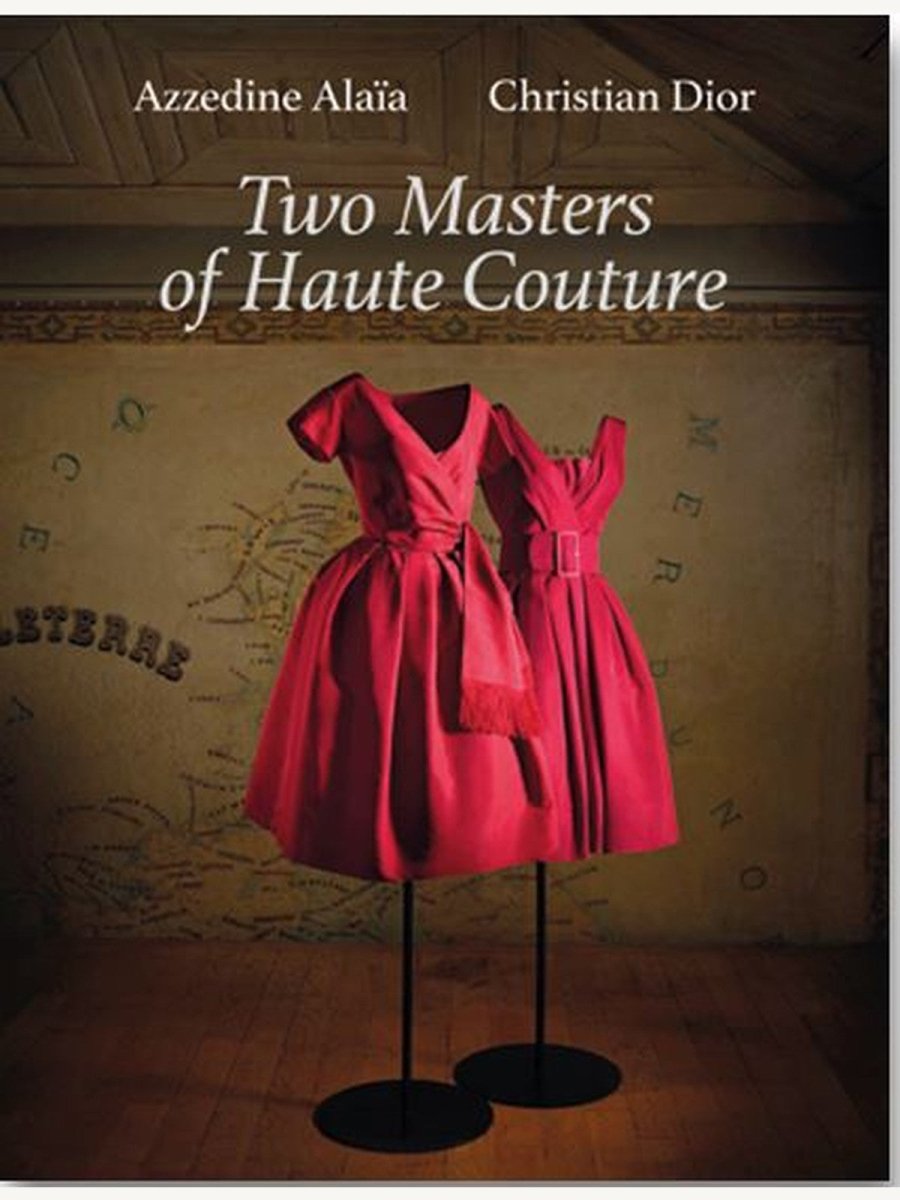
The Alaïa and Dior volume, edited by Carla Sozzani and Olivier Saillard with Saillard's text, begins with a detail that is hard to improve on. Azzedine Alaïa first encountered Christian Dior as a teenager in Tunisia, through the fashion magazines belonging to Madame Pinault, and later undertook a four-day internship at Maison Dior in 1956 that he carried with him for the rest of his career. The book sets Alaïa's own work against the Dior pieces he collected across a lifetime — two designers thirty years apart, bound by a shared seriousness about cut and craft. For anyone who reads fashion magazines closely, it is a useful reminder of what a printed page can start.
Pieter Henket's Birds of Mexico City is the newest instinct on this list. Working over several years with the Mexican stylist Chino Castilla in a studio the two of them built for the project, Henket photographed a generation of young Mexicans — dancers, mask-makers, designers, performers — reworking gender, identity, tradition and spirituality on their own terms. Seventy-two black-and-white plates, made slowly, with the sitters' collaboration written into the method rather than added afterwards.
Where to find them
All four are on the shelf now: Todd Webb's Paris, Meyerowitz on Morandi, Alaïa and Dior, and Birds of Mexico City. The wider selection sits in Boutique Books, alongside the magazines that make up the rest of the shop. If the magazine side is where you keep up, this is where you keep — and the two habits tend to belong to the same reader.